I also love Jeff's writing, and also his name, for obvious reasons. Not having seen this when he first posted it, I would say his nostalgia overlooks two factors that weren't present in the 60s, but are now. These include:
1. Title IX-The need to provide equal access for women who have the interest and ability to play sport is what results in Cal fielding 27 sports, including rugby, which is the second most of any public school in Division I, behind only Ohio State. That creates a need for revenue from football and basketball, because of . . .
2. State Budget Cutbacks/Ennui-I use the term ennui, because the budget problem is not just a budget problem, but also a morale and intellectual failure of the public and Legislature to be willing to support the university. JeffEW is in the same camp as my father, who believes first-class athletics are as important as first-class academics, and should be supported, even if taxpayer money is required. Unfortunately, in the Barsky era, there appears to be very little support for that position. The general public doesn't want to pay for a top-flight university, IMHO.
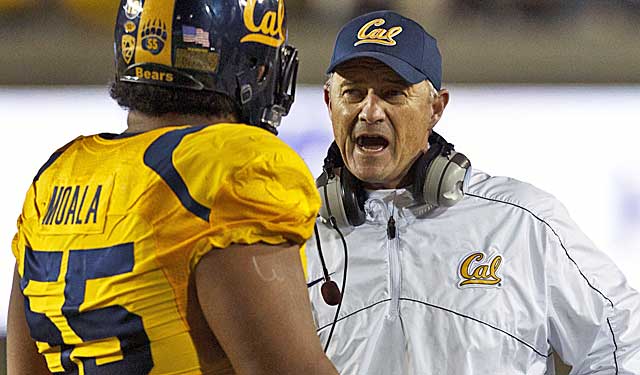
As I have pointed out previously, Cal came to a sports crossroad in 2004. It could have chosen not to do the stadium project, Tedford would have left, and football probably would have returned to mediocrity, drawing 30,000-50,000 fans per game, depending on weather and the opponent. Football spending would have stayed flat, I imagine. Whether ultimately that would have required cuts in non-revenue sports, I'm not sure. Assuming the State finally would have insisted that Memorial was unsafe, football would have moved to the Oakland Coliseum, I guess.
Instead, boosted by Tedford's success, the Athletic Department chose to roll the dice and boost the facilities to try to be competitive with our peers in Division I, as Tedford had demanded, even in a region that has significant pro competition for the sports entertainment dollar. Because of the cost of the stadium upgrade, football revenue, from donations and ticket sales, became a must, and therefore winning did as well. Tedford didn't win, so he got fired. Whether the academic problem resulted from the pressure to win, which resulted in a near-Bozeman like decision to recruit more marginal students, I'm not sure.
In my view, Tedford's downfall was of his own doing. He demanded the improved facilities, the facilities required a higher revenue stream, that revenue stream required him to win, and he didn't. Therefore, he was fired, but has the soft cushion of a big severance to land on. I'm not overly sympathetic. College sports is now a tough business, in a way it wasn't in Jeff's era. Unless you leave Division I, that's a given.