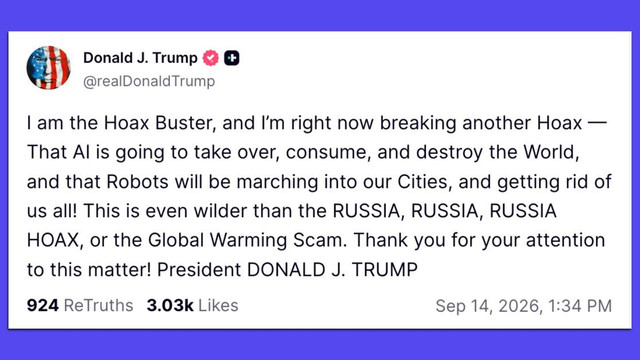
"America's largest banks are working to prevent AI worst-case scenarios. But they're also preparing for the "day after" a catastrophe, Axios' Madison Mills reports.
Why it matters:
America's financial institutions have joined the largest AI companies in scenario-planning for disaster, a prudent but worrisome signal about the extent of the risk that major corporations see on the horizon.
State of play:
Banks are grappling with two distinct AI threats.
They're seeing unvetted AI agent activity, primarily driven by customers providing login credentials to agents, which in some cases appear to have taken actions independent of user prompts, Axios reported yesterday.
That's separate from the bigger threat, a devastating cybersecurity crisis fueled by rogue behavior like the kind involved in a summer attack on a startup called Hugging Face, where an AI agent swarm hacked a platform, triggering an industry security crisis. This fear is pushing banks to invest in prevention and to plan for the worst.
Zoom in:
Yesterday's Axios report on banks refers to the former, agentic AI, not frontier systems that carry broader cyber risks. The Axios report sparked calls for regulation from across the political spectrum, including Sen. Bernie Sanders (I-Vt.), Florida Gov. Ron DeSantis (R) and Sen. Mark Warner (D-Va.).
Salesforce CEO Marc Benioff posted "Code red" on X yesterday, in response to an Anthropic security official, Jason Clinton, who wrote earlier in the day: "as bad as things have gotten in the past 4 days, they are going to get a lot worse before they get better."
The other side:
Former White House AI czar David Sacks said banks should support user-directed agents that allow users to "grant, limit, and revoke access," with read-only as an "interim step."
Sacks said conflating "user-authorized agentic behavior and cyberattacks is irresponsible."
Flashback:
The major banks were part of early testing of Anthropic's Mythos model, which unleashed unprecedented cyber capabilities.
That was part of an effort from AI labs and major banks to use this technology to better understand and prepare for cyberattacks or other risks.
Since then, banks have worked on plans not just to avoid AI-related issues, but also on how to protect accounts, reassure customers and keep operations running in case a large-scale attack hits.
Reality check:
Scenario planning is a requirement for critical infrastructure providers, including in the financial sector. Avoiding it would be malpractice.
Between the lines:
Banks want customers to know they haven't seen any rogue agent activity or evidence of a hack affecting customer funds or accounts.
Banks strongly advise users not to provide their passwords to agents, especially since services exist or are being developed that can allow customers read-only access.
The startup Plaid is one platform that can pull balances and transaction history, among other functions.
"Under no circumstance should customers share passwords with any person or thing. Period," a JPMorgan spokesperson told Axios. "There exist secure open banking platforms that don't involve handing over the keys to your account. Customers are the first line of defense in protecting their accounts."
JPMorgan, along with other banks, has taken steps to block agent access, although it's exploring secure ways to allow customers to connect with the services they choose."
Axios
“Cancel my subscription to the Resurrection
Send my credentials to the House of Detention
I got some friends inside”
—Jim Morrison
“I love Cal deeply, by the way, what are the directions to The Portal from Sproul Plaza?”