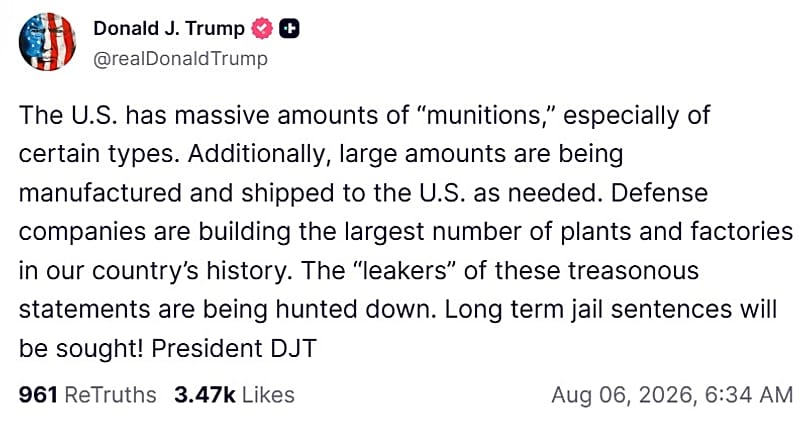
After reading about Trump screaming at Hegseth at Camp David for running out of gear, I decided to look into this subject. Shouldn't we be hiring some of these Ukranian fellers and signing them to max contracts?
Ukraine became a global superpower in drone and robot warfare through existential necessity, hyper-rapid innovation cycles, a vast decentralized commercial tech ecosystem, and heavy integration of artificial intelligence (AI).
1. The Ultra-Fast "Feedback Loop"The defining advantage of Ukraine's drone industry is its unprecedentedly fast development cycle.
Real-time adaptation: Software developers, engineers, and frontline operators talk directly to one another.
Rapid fixes: Modifications to bypass new Russian electronic jamming are often coded, tested, and deployed to the front lines within days or weeks.
Networked operations: Instead of relying on one "perfect" drone, Ukraine deploys networked "families" of systems, reconnaissance, relay, interceptor, and strike drones working in tandem.
2. A Massive, Decentralized Private Tech EcosystemUnlike traditional Western defense models that rely on a few massive, slow-moving military contractors, Ukraine decentralized its production.
Brave1 Hub: The government created platforms like the Brave1 defense tech cluster to fast-track state registration, funding, and testing for private startups.
Garage-to-Frontline Pipeline: Hundreds of small commercial companies, student groups, and tech startups pivot directly to defense production.
Explosive catalog growth: Ukraine has integrated over 200 domestically developed aerial drone systems and more than 40 uncrewed ground vehicle (UGV) platforms into its military since 2022.
3. Overcoming Electronic Warfare via AI AutonomyAs Russia heavily deployed electronic warfare (EW) to jam radio frequencies and sever the link between human pilots and drones, Ukraine adapted by removing the human pilot from the final phase of attack.
Terminal Autonomy: Drones are equipped with cheap microchips running computer vision and machine learning. Once an operator identifies a target from afar, the AI takes over tracking. Even if Russia completely jams the radio signal, the drone locks on and strikes autonomously.
Automated Air Defense: Ukraine fields mass-produced interceptor drones (like Skyfall's P1 Sunjet Killer) that utilize AI-assisted targeting modules to track and crash into high-speed Russian attack drones.
4. Expansion into the "Robot Army" (UGVs & Naval Drones)Uncrewed Ground Vehicles (UGVs): Ground robots (like the Rattel M and Rattel H) perform thousands of dangerous missions, including casualty evacuations, mine-laying, and autonomous supply logistics through heavily shelled areas.
Robotic Amphibious Landing Operations: Ukrainian forces have advanced to complex "marsupial" tactics, such as utilizing naval drones to beach on enemy shores and successfully deploy tracked, machine-gun-wielding ground robots to seize positions.
5. Drastic Cost AsymmetryUkraine learned to counter incredibly expensive weapons using ultra-cheap commercial components. For instance, rather than exhausting scarce, multi-million-dollar air defense missiles against Russian Shahed drones, Ukraine scaled up "Mala PPO" (small-scale air defense). This relies on thousands of mobile fire units and cheap First-Person View (FPV) interceptor drones manufactured daily for a fraction of the cost.
“Cancel my subscription to the Resurrection
Send my credentials to the House of Detention
I got some friends inside”
—Jim Morrison
“I love Cal deeply, by the way, what are the directions to The Portal from Sproul Plaza?”